Every business seminar insists that moving to the cloud is faster, cheaper, more scalable and more modern, and Perth — along with the rest of Australia — followed that advice, only to discover on Tuesday night, when a global outage inside Cloudflare abruptly took down everything from retail checkout systems to airport flight information boards, that the technology sold as resilient and secure is in reality far more fragile, because the cloud is not inherently safe but an outsourced dependency, and when the provider at the centre of that dependency fails, everyone who relies on it fails with it.
Cloudflare Outage Perth — but the exposure was massive
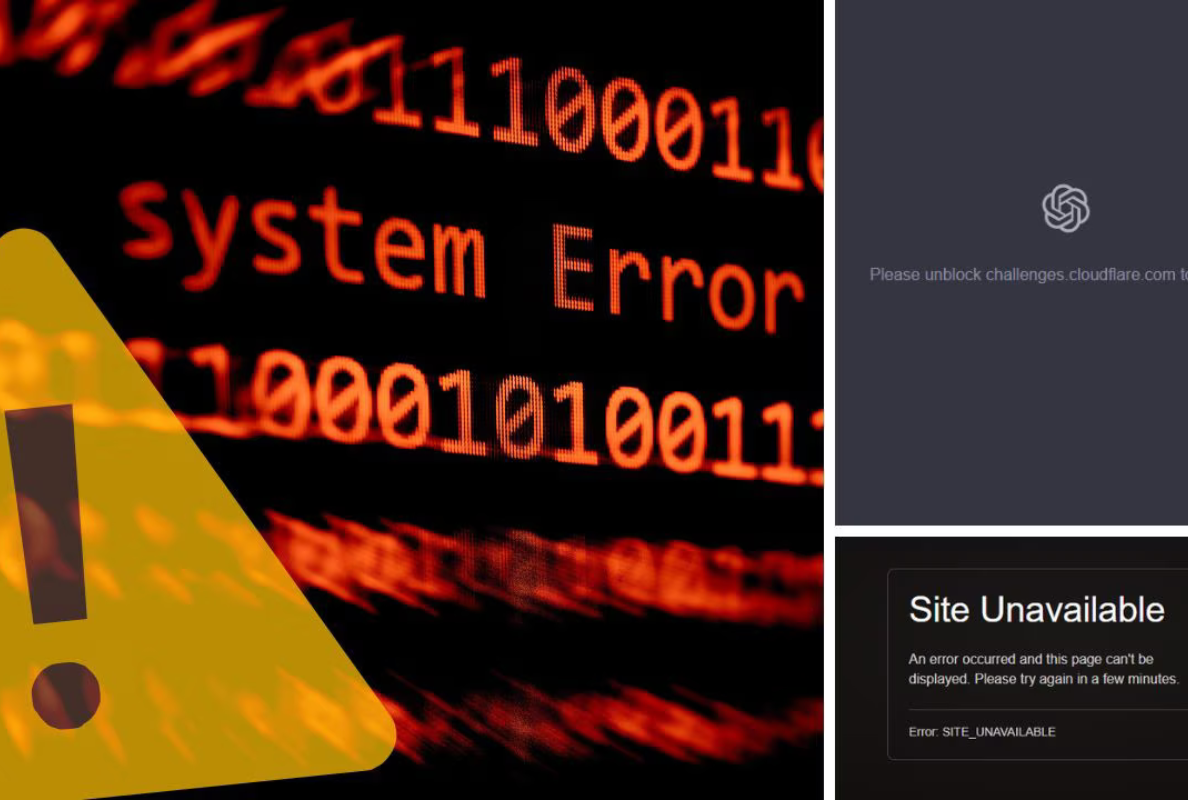
This wasn’t a catastrophic cyberattack, a targeted exploit or even a major technical failure, but simply a single oversized configuration file that managed to disrupt Perth Airport’s information systems, break web-based check-in, shut off access to ChatGPT, freeze Spotify streams across Western Australia, block retail sites, interrupt digital payment flows and affect gaming, media and enterprise APIs, and if a file that merely grew too large can cause that level of disruption, it forces us to ask what a deliberate, well-executed real attack could do.
The cloud dependency problem no one wants to admit -Cloudflare Outage Perth

Cloud adoption skyrocketed in recent years:
- Small businesses moved from local servers to SaaS platforms
- Airports outsourced apps and data to web-based systems
- Schools shifted to cloud-based learning infrastructure
- Retailers moved POS, booking and stock management online
- Even hospitals and emergency services rely on distributed cloud networks
But every step away from local infrastructure increased systemic vulnerability.
Perth’s Cloudflare outage is the latest proof.
Table: Cloud vs On-Premise Dependency Risk -Cloudflare Outage Perth
The cloud works — until it doesn’t.
Perth businesses experienced what experts call “distribution collapse” (Cloudflare Outage Perth)

When the Cloudflare outage hit, some Perth businesses lost:
- Booking systems
- Customer portals
- Internal dashboards
- POS authentication
- Web traffic
- Order and logistics tracking
One Fremantle owner told us:
“We didn’t lose power. We lost everything else.”
They didn’t lose infrastructure — they lost access to it.
That’s the difference between cloud dependency and local control.
Centralisation is not efficiency — it’s risk concentration
Cloudflare alone controls traffic for 20% of global internet requests.
AWS hosts major Australian government systems.
Azure handles hospital and enterprise security.
Google Cloud powers authentication and APIs.
Instead of many small risks, Australia has a few impossible-to-ignore risks.
Cybersecurity researchers call this “critical dependency collapse,” and it is already happening.
Business continuity plans are outdated (Cloudflare Outage Perth)
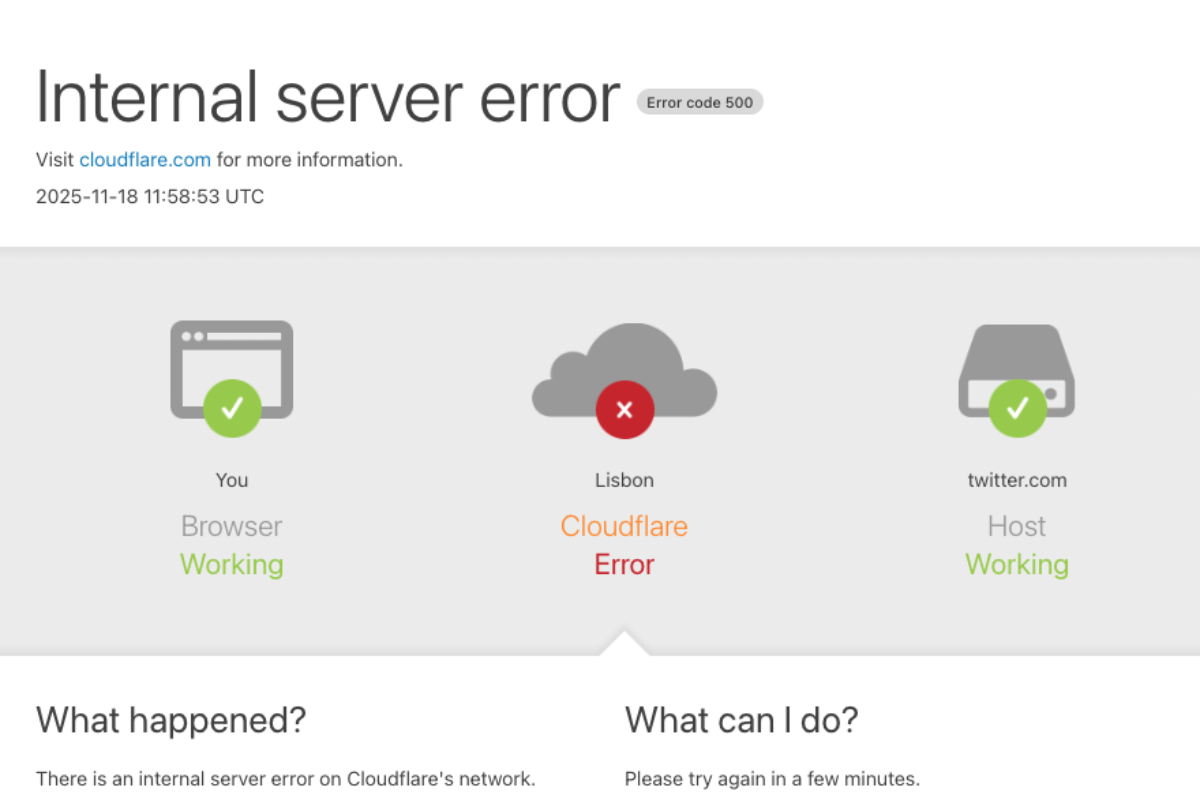
Most business continuity frameworks still assume:
- Localised system failures
- Power outages
- Hardware faults
- Natural disasters
- Internal network failures
What they don’t assume is:
✔ Third-party outage upstream
✔ Global CDN failure
✔ DNS provider failure
✔ Cloud API chain reaction
✔ Shared dependency collapse
Perth just discovered that business continuity must include cloud continuity — and almost no one is ready.
Cloud systems are powerful, convenient and often the right choice, but relying on the cloud without meaningful redundancy is not innovation but negligence, and while the Cloudflare outage didn’t shut down Perth, it demonstrated just how quickly it could, making it clear that if Western Australian businesses want to withstand the next disruption, they must stop assuming that “someone else” will keep their systems running, because sometimes that “someone else” is nothing more than a single file sitting on a server four continents away.
FAQ Section
About the Author